QSC assembles to discuss Year 1 progress, plan for Year 2
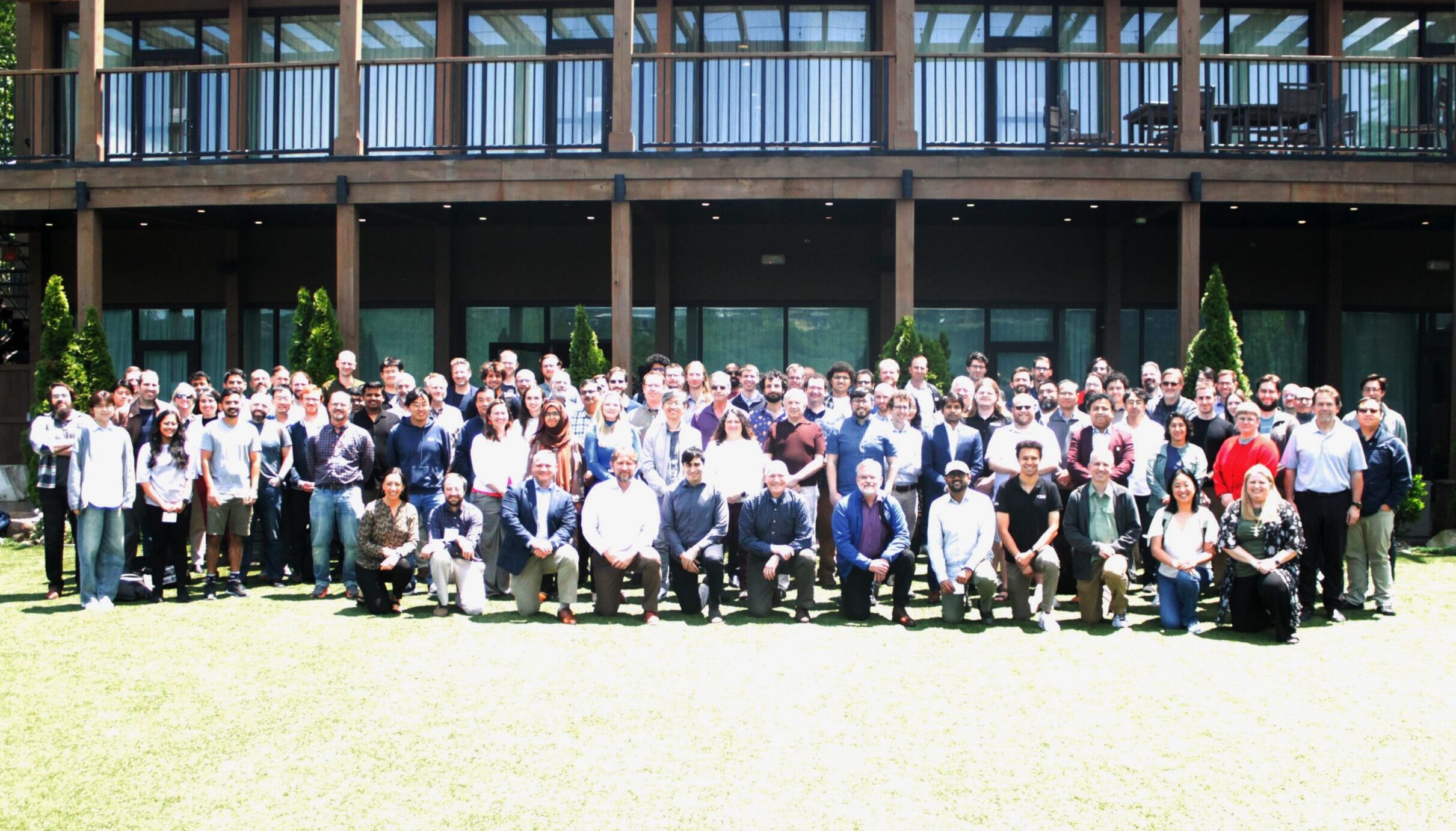
Many of the Quantum Science Center’s members convened at the base of the Smoky Mountains for the center’s annual all-hands meeting in May 2026. Credit: ORNL, U.S. Dept. of Energy
Quantum Science Center (QSC) members gathered in Gatlinburg, Tennessee, May 12-14 for the center’s annual All-Hands Meeting to review progress and plan future activities that support its mission to build an ecosystem for scalable quantum high-performance computing.
Travis Humble, director of the QSC, opened the meeting by reiterating the recent DOE priority to deliver the first generation of fault tolerant quantum computers capable of scientifically relevant quantum calculations by 2028—an objective in which QSC plays an important role.
Humble expanded on that directive by asking, “How will we use quantum computers?”, a question that plays a central role in shaping the center’s activities.
Discussions throughout the meeting focused on the QSC’s transition to fault-tolerant methods, including the early adoption and demonstration of quantum error correction across multiple platforms. The meeting reviewed center accomplishments to date as part of the Year1 milestone to establish the foundations of a quantum-HPC (QHPC) ecosystem. Members also planned how the center can deliver impactful outcomes for the nation by integrating efforts through quantum simulation campaigns and by building capabilities for hybrid QHPC workflows.
“Remaining aware of the scientific challenges we are trying to solve will help us to focus on the tangible deliverables that build our QHPC ecosystem,” said Humble.
Each day began with plenary talks that posed fundamental questions to the group:
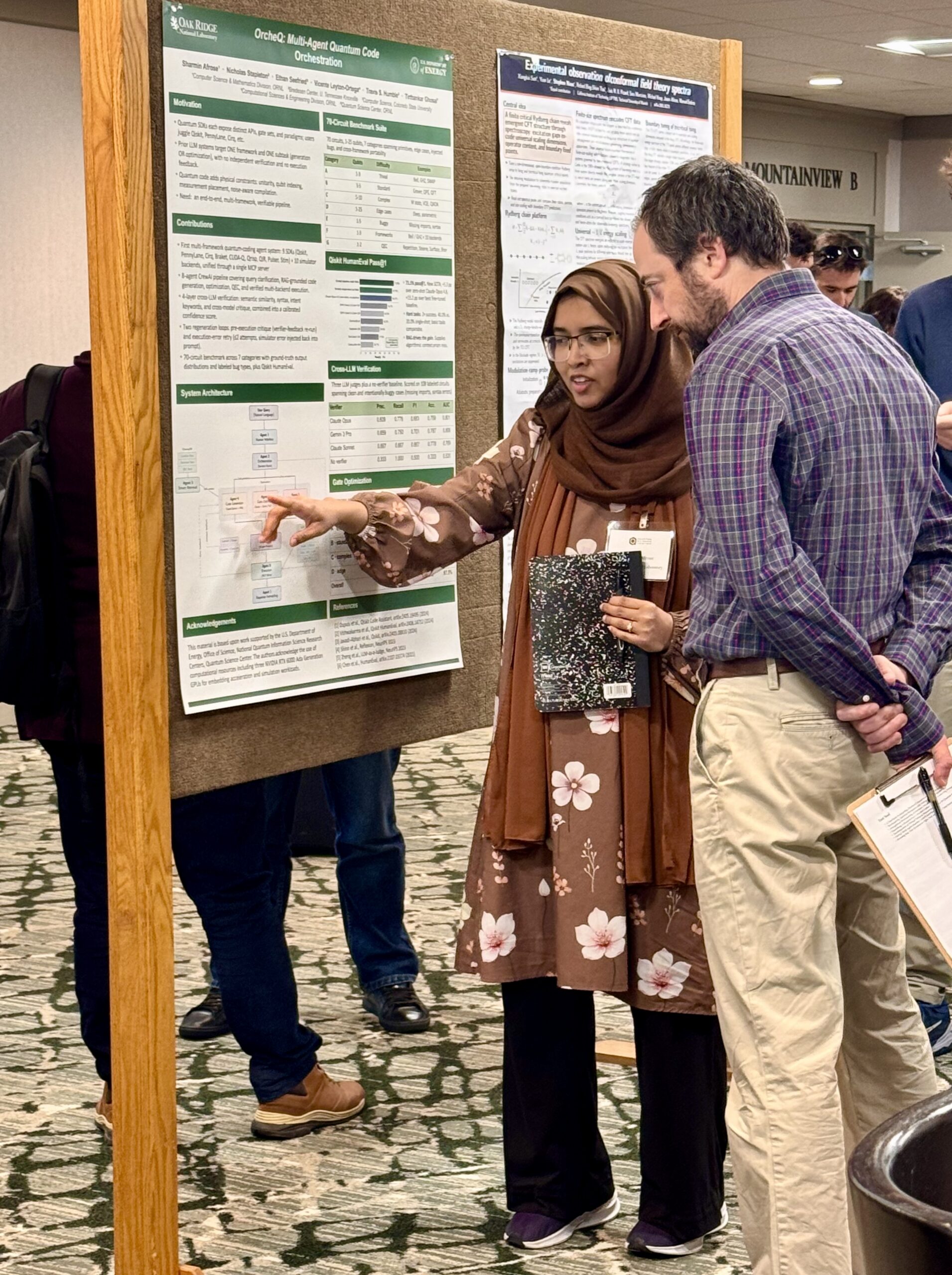
QSC members shared their work during a poster session at the meeting. Credit: ORNL, U.S. Dept. of Energy
- Are we on track to meet our Year 1 milestone to establish the foundations of the QHPC ecosystem?
- How can we accelerate demonstrations of QHPC systems and simulations within the QSC?
- What gaps in skills and resources need to be addressed for sustaining progress?
- How will QSC address the Year 2 center goal to deploy tools for QHPC prototypes and methods?
- What transformative innovations in quantum science and technology should QSC prioritize?
- What QSC collaborations and infrastructure are needed to support center innovations?
The plenary sessions were followed by breakout discussions, where members addressed these questions and others within their respective thrusts and cohorts.
Midway through the meeting, the QSC hosted a poster session that gave members the opportunity to present, review, and discuss recent projects with colleagues. A panel of judges selected the three top-performing posters. The winners included Xiang Fang from University of California San Diego), Anshumitra Baul from Oak Ridge National Laboratory, and Keerthi Kumaran from Purdue University.
In addition to everyone who participated in the post session, the QSC is grateful to the 117 center members who attended the Gatlinburg gathering, including distinguished advisors from the Governance Advisory Board and the DOE Office of Science.
Next Steps
While significant work remains, discussions throughout the meeting made clear that the center has achieved substantial progress. As one example of that momentum, the QSC is preparing the first release of the QSC program. To support this initial alpha release, the center will organize the many prototypes, databases, documentation, and specifications developed over the past nine months into a comprehensive framework that will lead to future public release.
This release will represent a major step forward that highlights the exciting progress made by the QSC and focuses the center on our Year 2 milestone to deploy new tools for fault-tolerant quantum computing.